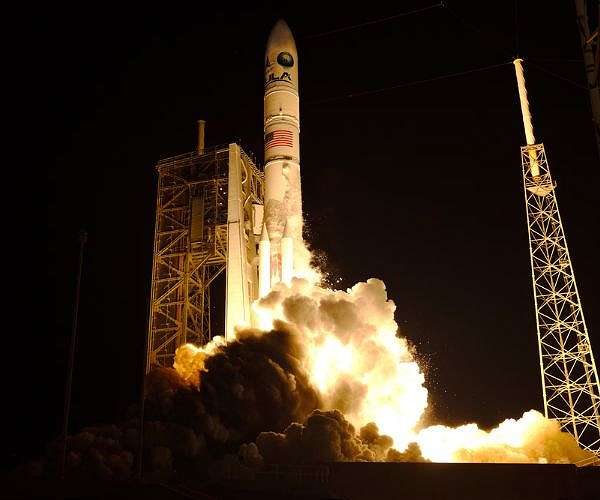
U.S. Space Force Space Systems Command and United Launch Alliance have completed the USSF 87 mission, launching a Vulcan Centaur rocket from Space Launch Complex 41 at Cape Canaveral Space Force Station, Florida, at 4:22 am EST Feb 12. The pre dawn liftoff marked the second National Security Space Launch mission to fly on ULA's Vulcan rocket under the NSSL program.
The mission was directed by Space Systems Command's Systems Delta 80, also known as SYD 80, working with mission partners across the launch enterprise. The launch team delivered a set of national security payloads to their designated orbits to strengthen U.S. space based capabilities and support warfighting requirements.
Mission officials reported an anomaly on one of the four solid rocket motors early in flight, but the Vulcan launch vehicle still achieved the required performance to place the payloads in their planned orbits. The SYD 80 team will coordinate closely with ULA under the mission assurance and space flightworthiness process before clearing the next Vulcan mission that carries a national security payload.
Stephen Burke, Vulcan System Program Director, said, "We're proud of everyone and the work they've done to make today's launch a success and increase America's warfighting capability." The mission continued ULA's efforts to bring Vulcan into regular service for national security launches while maintaining performance, reliability and schedule.
The primary payload complement for USSF 87 included a new spacecraft for the Geosynchronous Space Situational Awareness Program, or GSSAP. Built by Northrop Grumman, the GSSAP space system supports U.S. Space Command's space surveillance operations as a high performance, dedicated Space Surveillance Network sensor in geosynchronous orbit. The spacecraft separated from the launch vehicle and was deployed to orbit about six and a half hours after liftoff.
ULA flew Vulcan in the VC4S configuration for this mission, with a Centaur V upper stage, four solid rocket motors and a standard payload fairing. The configuration leverages ULA's existing industrial base and production infrastructure to provide high energy delivery to orbit for demanding national security missions and to support U.S. objectives for space dominance.
In addition to GSSAP, USSF 87 carried other research, development and training systems intended to help Guardians refine tactics, techniques and procedures for precision on orbit maneuvers. These systems are designed to improve resiliency and protection for assets in geosynchronous orbit and to validate new concepts for how the Space Force operates in the domain.
Systems Delta 80 executes the Space Force core function of Space Access, including spacelift and range control missions. The organization works closely with Space Launch Delta 30 and Space Launch Delta 45 to provide responsive, resilient launch and test infrastructure that supports U.S. economic, technological and scientific leadership, as well as operational missions.