
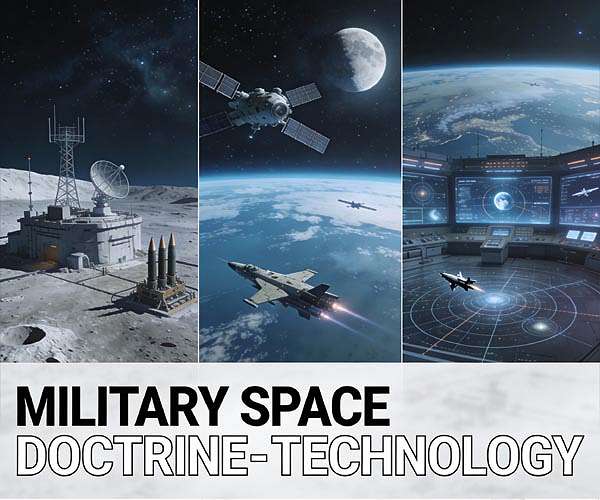
Space security is no longer a narrow military specialty reserved for rocket scientists and classified operators. It now sits at the intersection of satellites, cybersecurity, artificial intelligence, orbital traffic, communications, and law. That shift raises a serious education question: are universities preparing enough students for the jobs that will protect the next generation of space systems?
The pressure is building. WritePaper found that the global space economy was estimated at $630 billion in 2023 and could reach $1.8 trillion by 2035, driven by space-enabled services such as communications, positioning, navigation, timing, and Earth observation. Defense is one of the sectors expected to help fuel that expansion, which means the workforce will need graduates who understand how space assets are built, protected, governed, and attacked.
For students, the opportunity is real, but so is the burden. A student interested in this field may be studying aerospace design, coding, cyber operations, policy, or law while also trying to produce technical essays and research papers under heavy deadlines. When overwhelmed students search for academic writing support and even try to pay to write paper since the workload is becoming unbearable. Space security education cannot be treated as a single-major pathway anymore.
A Space Economy Growing Faster Than the Talent Pipeline
WritePaper research data shows that the U.S. space economy employed more than 373,000 private-sector workers in 2023. Specifically, 56% of space-economy jobs in 2022 were STEM roles, more than double the STEM share of the overall U.S. workforce. Software developers were the largest single occupation in that analysis, ahead of several hardware and middle-skill technical roles.
That matters because it challenges the public image of space careers. The future space-defense employee may not be designing a launch vehicle. They may be securing satellite networks, analyzing sensor data, modeling orbital threats, managing ground systems, or writing policy for dual-use technologies. Universities that still present space mainly as aerospace engineering risk undeserving students who could enter the field through computer science, cybersecurity, electrical engineering, data science, international relations, or law.
Why Cybersecurity Is Now a Space Education Issue
Satellites are connected to ground stations, cloud platforms, software-defined payloads, user terminals, defense networks, and commercial customers. That creates a larger attack surface and makes cybersecurity a core space-defense skill.
The broader cyber labor market is already strained. Employers posted 514,359 cybersecurity job listings over the previous 12 months in the latest national update, a 12% increase from the prior reporting period. That demand is not limited to banks and software companies. Defense contractors, satellite operators, intelligence agencies, and critical infrastructure providers are competing for the same students.
This is where universities face a curriculum challenge. A standard aerospace program may not give students enough secure-systems training. A standard cybersecurity program may not explain orbital mechanics, satellite command links, or space mission assurance. Space security needs graduates who can move between those worlds.
A modern space-security curriculum should expose students to:
satellite systems and ground-segment architecture
cybersecurity and secure software development
AI, machine learning, and sensor-data analysis
orbital debris and mission resilience
defense policy, export controls, and space law
ethics, escalation risk, and dual-use technology governance
That is a lot to ask from a four-year degree. The answer may not be one perfect "space defense" major, but stacked pathways: majors, minors, certificates, labs, internships, and capstone projects that let students combine technical and policy skills.
Waning Talent Warning Signs
The talent problem is not theoretical. The aerospace and defense sector continues to grow, yet companies report persistent skills gaps and high turnover. The industry-wide attrition rate was reported at nearly 15%, while 76% of member organizations reported sustained challenges hiring engineering talent and 56% reported difficulty sourcing skilled trades talent.
If students graduate with strong theory but little exposure to production, security clearances, defense procurement, classified environments, or mission operations, employers must spend years turning academic knowledge into usable capability. That slows hiring and increases the risk that graduates drift into commercial technology jobs with faster onboarding and clearer career paths.
For universities, the lesson is blunt: space defense education has to become more applied. Students need access to simulation environments, satellite-data exercises, cyber ranges, hardware labs, internship pipelines, and industry mentors. Otherwise, the gap between classroom preparation and mission needs will keep widening.
Partnerships Are Becoming Part of the Classroom
Government and university partnerships are one sign that the education system is adapting. The U.S. Space Force's university program is designed to recruit, educate, and develop its workforce while supporting research, scholarships, internships, mentorships, and advanced academic opportunities. Its current list includes 14 universities, with goals that explicitly include research and workforce development.
That model treats students as more than future applicants. It places them inside a research ecosystem where academic work can connect to real operational questions: satellite resilience, space-domain awareness, secure communications, AI-assisted tracking, lunar infrastructure, or policy frameworks for contested orbits.
Law, Policy, and Ethics Belong in Space Defense Training
The skills gap is not only technical. Space security also depends on legal and policy judgment. Students entering the field need to understand how commercial satellites can become strategic assets, how cyberattacks on space systems might escalate, and how international norms affect military operations in orbit.
This is where law schools and policy programs can play a larger role. Space law intersects with liability, spectrum rights, export controls, debris mitigation, commercial licensing, military activity, and dual-use systems. A future space-security team may include engineers, cyber analysts, intelligence specialists, lawyers, and policy advisers working on the same problem from different angles.
What Universities Should Do Next
To prepare students for the future of space security, universities should move beyond isolated programs and build interdisciplinary pipelines. The most practical changes include:
combining aerospace, cybersecurity, AI, and policy coursework
expanding internships with defense, space, and satellite organizations
building cyber ranges and space-systems simulation labs
supporting student research on space-domain awareness and satellite resilience
teaching space law and ethics alongside technical design
The Real Test Is Whether Students Can Cross Boundaries
The space defense skills gap is not simply a shortage of students. It is a shortage of students prepared for the way space security actually works. The field needs engineers who understand cyber risk, cyber specialists who understand satellites, lawyers who understand technical systems, and policymakers who understand data and deterrence.
Universities are beginning to respond, but the pace matters. The space economy is expanding, defense demand is rising, and cyber threats are moving faster than academic committees usually do. If universities want to prepare students for the future of space security, they need to teach across boundaries now.
The next generation of space security may be decided not only in orbit, but in classrooms, labs, internships, and research programs.
