
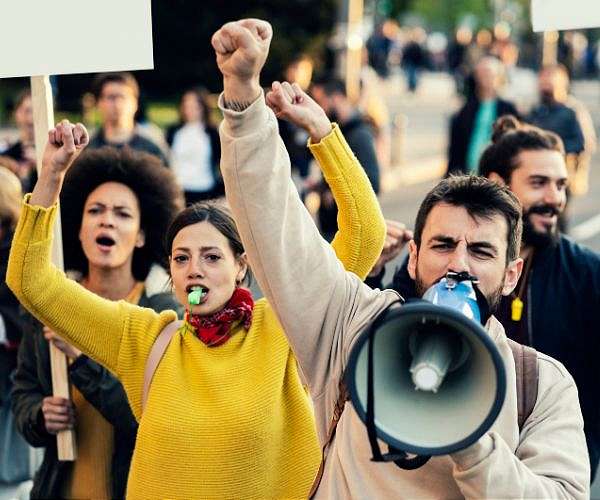
American college students are living in an unusual political atmosphere. There have been several wars that have taken place in different parts of the world, including the Israeli-Gaza War and the war in Ukraine by Russia. These wars now appear in protests at campuses, class discussions, valedictorian speeches, student organizations, social media fights, and discussions with relatives at home.
It is not only about foreign policy, but also involves issues like freedom of expression, personal security, belongingness, and faith in the institution. College students have raised several challenging issues about whether there is freedom of expression, how their opinions will affect their financial status, scholarships, visa applications, and other opportunities, and whether campuses can be safe and allow disagreements.
Students who are already struggling with examinations, paying rent, doing part-time jobs, and managing time to complete academic requirements have an additional burden because of politics. Some students may opt for tutorial, advising, counseling services, or even paper help during times when political happenings coincide with academic obligations. Support cannot solve the political situation, but it can make students' lives easier.
The Urgency Of The Topic As Of May, 2026
The student environment in the United States as of May 2026 is highly influenced by the conflict in Israel and Gaza, as well as the political issue with Palestinian activism, antisemitism, freedom of speech, and discipline at American universities. According to Reuters, there were attempts by the U.S. administration to deport Mohsen Mahdawi, a Columbia University activist fighting for Palestine. The story gained momentum as an example of the tension between free speech and immigration laws.
There is also a shift in the attitude of American youth towards the issue. Based on the survey conducted by the Pew Research Center in April 2026, there is an overall deterioration in the U.S. public perception of Israel and its Prime Minister Benjamin Netanyahu. These views were especially negative among young people, although not implying a unanimous view of the generation.
Manifestations Of War Politics Within Students' Lives
Students' daily lives are affected by war politics. Their comfort levels discussing certain topics in classes, participation in particular events, and feelings of security when crossing the university grounds could be impacted. International students could also feel uncomfortable due to potential protests, immigration issues, and visas.
Area Of Student Life
What Students May Experience
Why It Matters
Classroom Discussion
Students avoid speaking or argue more sharply
Learning gets harder when trust drops
Campus Safety
Jewish, Muslim, Arab, Israeli, Palestinian, and other students may feel targeted
Safety concerns can affect attendance and mental health
Free Speech
Students worry about discipline, doxxing, or future job risks
Political expression can feel risky
Academic Focus
News, protests, and fear interrupt study routines
Stress can lower performance
International Students
Visa concerns may make activism feel dangerous
Legal risk is not equal for every student
In the first place, the problem is that there are multiple truths at play. While some Jewish students speak of intimidation, others who identify as Palestinian, Arab, Muslim, or pro-Palestinian speak of censorship and retaliation. Then, there are also students who want stronger hate speech laws, while still others fear such laws might limit political discussion.
Speech Versus Safety For Students
In the United States, American universities are facing increasing pressures from various angles. Politicians and activist groups are pressing more strongly for protecting students against antisemitism. Civil libertarians are highlighting concerns that some measures could have criminalized political expression. Parents just want their children to be safe. Students seek to ensure that their right to expression is preserved. Administrators try to satisfy everyone and make everyone unhappy.
Cases relating to graduates illustrate how delicate the matter becomes. As reported by AP News, one commencement address was canceled at Rutgers University because its speaker's invitation was rescinded over his social media posts on Palestine. This is another example of the national debate surrounding Palestinian activism on campuses.
This is significant for students because it carries a message. Moments that should have been joyful, such as a graduation ceremony, now transform into a political debate. Suddenly, one wonders whether social media presence, opinions, club involvement, or demonstration attendance might influence future careers.
What Students Should Do Now
Students cannot influence national politics and international conflicts. They can manage aspects of their own behaviors, sources, and support systems. It is important to make the right decisions amid an endless stream of breaking news:
Avoid mixing news and study time. Scanning your news feed every ten minutes will make it impossible to concentrate.
Rely on verified sources of information. Do not base your opinion on screenshots, snippets, and posts by unknown authors.
Research campus policy on protests. Be aware of procedures regarding demonstrations, entrance into buildings, and the use of signs.
Save documentation of threats and harassment. Preserve the message and file complaints through official channels if you are really being harassed.
Discuss the situation with others before posting anything angrily. Your reaction can be used against you in a way you may not anticipate.
Seek support. Academic advisors, like MyPaperHelp's Ethan Marshall, recommend counseling centers, professors, and other sources of help that have been set up just for such occasions.
All of the above does not mean that students should become completely neutral on all issues. It means that they need to remain calm enough to be able to think and learn.
What Colleges Should Do Better
But then, the students cannot take all the blame either. The universities themselves must have clear-cut guidelines. Appealing to vague notions like "community values" will not suffice if the students feel afraid, angry, or confused.
Universities must establish their policies regarding demonstrations before matters spiral out of control. They must differentiate political speech from harassment, discrimination, and threats. They must clarify their stance unequivocally. They must also make sure that aid is provided to a broad spectrum of groups, not just those in the news.
This is undoubtedly the hardest part – consistency. Universities will surely be criticized for protecting free speech only when it serves them and student interests only when it suits them.
Final Thoughts
Political division between American citizens due to the prospect of war spills over to students since the dispute infiltrates into the routine life of the educational institution and impacts students' communication style, physical well-being, identity formation, relationships, psychological state, and academic achievements. However, this should not be considered just the consequence of political disputes, which is perfectly natural for any democratic country.
What is needed, on the contrary, is exactly the opposite – clear rules, attentiveness, proper safety measures and additional support for the students affected by the political situation. War politics can have national or even international implications, but the effects of war politics are felt personally by students, for instance, in classes or dorms.
