
Walk into any gun shop in America and the sheer variety on display can stop a first-time buyer dead in their tracks. Handguns, rifles, shotguns, modern sporting platforms, each one looks different, feels different, and exists for a different reason. For someone who grew up around firearms, this is second nature. For someone just starting out, or even for an experienced shooter branching into a new category, the options can genuinely feel overwhelming.
The good news is that the logic behind firearm categories is actually straightforward once someone lays it out clearly. Every type of firearm was designed with specific use cases in mind, and understanding those use cases makes the whole landscape make sense.
This is not about telling anyone what to buy. It is about building the kind of foundational knowledge that makes every future decision, whether that is a first purchase, an addition to a collection, or simply satisfying curiosity, a more informed one. The American firearms tradition is rich and varied, and Golden Brothers Co has made it a priority to present that variety in a way that is accessible without being dumbed down.
What follows is a breakdown of the major firearm categories, what they were designed to do, and how American shooters actually use them today. By the end, the differences that once seemed confusing should feel a lot more intuitive.
Handguns: The Everyday Carry Standard
Of all firearm categories, handguns are probably the most culturally visible in the United States. They show up in news coverage, in conversations about self-defense, and in the holsters of law enforcement officers across the country. That visibility exists for a reason, handguns are the most practical option when portability and accessibility matter most.
The category breaks down into two primary types. Pistols are semi-automatic, meaning they feed from a detachable magazine and cycle a new round into the chamber automatically after each shot. They tend to hold more ammunition than their counterpart and are the dominant choice in both law enforcement and civilian concealed carry. Revolvers operate differently, ammunition sits in a rotating cylinder, and each trigger pull rotates the cylinder to align the next round. Revolvers are mechanically simpler, extremely reliable, and have a loyal following among shooters who value that simplicity.
Both types serve the same core purpose: personal defense in situations where a full-size long gun is not practical. Home defense, concealed carry where legally permitted, and everyday personal protection are the primary use cases. Law enforcement relies heavily on pistols as standard sidearms.
One thing worth emphasizing is that compact size does not mean easy to use. Handguns require consistent training and practice more than any other category. The shorter sight radius, the lighter weight that amplifies felt recoil, and the smaller grip all demand that the shooter develop real skill to use them accurately under pressure.
Rifles: When Accuracy and Distance Matter
If handguns are about portability, rifles are about precision. The defining characteristic of a rifle is its long barrel, which stabilizes the projectile over a longer distance and allows for significantly greater accuracy than a handgun can deliver at range.
American hunters have relied on rifles for generations, and for good reason. Whether you are pursuing whitetail deer in the Midwest, elk in the Rockies, or varmints on an open farm field, the rifle gives you the reach and accuracy to make ethical, clean shots at distances where a shotgun or handgun simply cannot perform.
The bolt-action rifle remains the gold standard for hunting precision. Each shot requires manually cycling the bolt to chamber a new round, which slows the rate of fire but encourages deliberate, careful shooting, exactly what ethical hunting demands. Semi-automatic rifles fire one round per trigger pull and chamber the next round automatically, offering faster follow-up shots that competitive shooters and some hunters prefer.
Modern sporting rifles, often called MSRs, represent the modular end of the rifle category. These platforms, built around designs that allow significant customization, have become enormously popular for competitive shooting, recreational target shooting, and a range of other applications. Their adaptability is a major part of their appeal, and understanding the platform is worth the time for any serious rifle shooter.
For rural property owners, a rifle also serves a legitimate defensive role, particularly in situations where the distances involved make a handgun inadequate.
Shotguns: Versatile, Reliable, and Uniquely American
There is an argument to be made that the shotgun is the most versatile firearm in the American tradition. It hunts birds and small game, it serves as a home defense tool, and it anchors entire shooting sports built specifically around its unique characteristics.
What makes a shotgun different is what it fires. Rather than a single projectile, most shotgun loads send a spread of pellets downrange simultaneously. That spread makes hitting a moving target, a flushing pheasant, a clay pigeon sailing across a blue sky, far more forgiving than trying to hit it with a single bullet. At close range, that same spread makes shotguns extremely effective for defensive purposes.
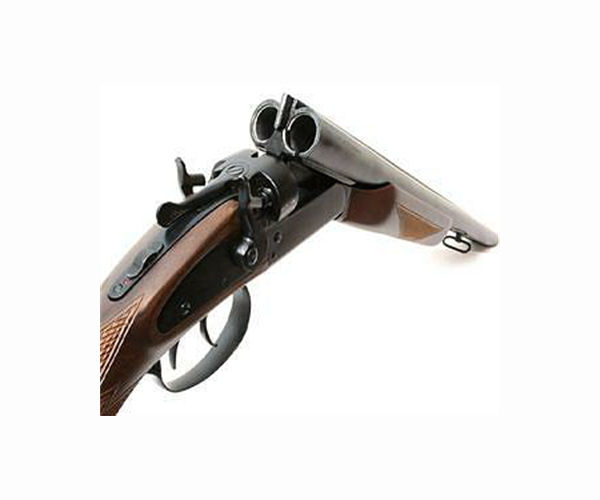
Pump-action shotguns are the most common configuration in American homes. They are mechanically simple, reliable under adverse conditions, and widely trusted. The manual pump action cycles the next shell and has a reassuring durability that generations of American shooters have depended on. Semi-automatic shotguns offer faster follow-up shots and are popular in competitive shooting sports like trap and skeet. Break-action designs, single or double barrel, are classic hunting tools and remain popular for both upland bird hunting and as introductory firearms for new shooters.
For someone buying their first firearm, a simple pump-action or break-action shotgun is often an excellent starting point. Low recoil loads are available, the manual of arms is straightforward, and the platform is forgiving enough for a beginner while being effective enough to serve real-world purposes.
Modern and Tactical Platforms: Designed for Performance and Adaptability
The most significant shift in the American firearms market over the past few decades has been the rise of modular, adaptable platforms that blur the traditional lines between categories. Modern firearms increasingly incorporate advanced materials, lightweight polymers, aluminum alloys, reinforced composites, and are designed from the ground up to be customized by the end user.
Adjustable stocks accommodate shooters of different sizes and proportions. Accessory rails allow optics, lights, and other attachments to be added and removed based on the task at hand. Interchangeable components let a single platform serve multiple roles without requiring a separate firearm for each one. This is the direct civilian inheritance of military design philosophy, where adaptability is not a luxury but a core requirement.
These platforms are popular in competitive shooting sports, where fine-tuning equipment to a shooter's specific preferences can make a measurable difference in performance. They are also the subject of considerable enthusiasm among recreational shooters who enjoy the process of building and refining a setup over time.
Ammunition: The Part That Actually Does the Work
Every firearm is only as useful as the ammunition it fires, and matching the right ammunition to the right platform is not optional, it is a fundamental safety and performance requirement.
Each firearm is chambered for a specific caliber or gauge. Firing incorrect ammunition can damage the firearm, cause injury, and in serious cases result in catastrophic failure. Beyond the basic safety question, ammunition selection also affects performance significantly. Different loads within the same caliber vary in bullet weight, velocity, and terminal behavior, all of which matter depending on whether you are hunting, competing, or training.
For shooters still building their understanding of how different calibers and gauges relate to specific firearms and uses, working through a well-organized resource makes the learning process considerably faster. A curated overview of firearm types and compatible ammunition gives that kind of structured context, connecting platform categories to the loads that actually suit them, without requiring a deep dive into ballistics literature just to get oriented.
Understanding ammunition is not a separate subject from understanding firearms. The two are inseparable, and treating them that way from the beginning saves a lot of confusion later.
Matching the Firearm to the Purpose
The single most practical piece of guidance for anyone navigating firearm selection is this: start with the purpose, not the platform.
A homeowner primarily concerned with home defense has different needs than a competitive shooter, a deer hunter, or someone who wants a reliable range gun for weekend practice. The firearm that serves one of those purposes exceptionally well may be entirely wrong for another.
For home defense, the leading choices are handguns and shotguns, both offer effective stopping power in the close-range scenarios that home defense situations typically involve. For hunting, the right choice depends entirely on the game and terrain. Rifles dominate for medium and large game at distance; shotguns are the traditional choice for birds and small game. For sport shooting and competition, the platform choice is often dictated by the specific rules and format of the discipline.
Beginners benefit most from starting with something simple, low-recoil, and mechanically straightforward. A .22 rimfire rifle or a light-load shotgun are time-tested starting points that build fundamentals without punishing new shooters with excessive recoil.
The Foundation Is Always the Same
Regardless of which category a firearm falls into, the foundation of responsible ownership does not change. Safe storage, consistent training, knowledge of applicable laws, and genuine respect for what firearms are capable of, these are not suggestions. They are the baseline that every responsible American gun owner operates from.
The variety in the firearms market is a reflection of the variety in legitimate use cases. Hunters, competitors, collectors, and people who simply want a reliable tool for personal protection all have real needs that different platforms address. Learning the categories and what they are actually designed for is the first step toward making decisions that genuinely serve those needs.
